 Mohammad Fahim
A travel insurance API lets your platform sell insurance with every trip. It connects you to insurers in real time. As a result, you can show a quote, sell a policy, and issue cover during checkout. Moreover, it adds a new revenue stream with little extra work. In this guide, you will learn how a travel insurance API works and how to connect one.
Insurance is a natural add-on to flights and hotels. However, it has its own rules and data. Therefore, a good API is key to selling it well.
What Is a Travel Insurance API?
A travel insurance API is a software link between your platform and an insurer. It lets your app request a quote and buy a policy in real time. An application programming interface (API) simply lets two systems talk to each other.
The product itself is travel insurance. It covers risks like trip cancellation, medical costs, and lost bags. The API delivers this cover as data your platform can show and sell.
It sits beside your other travel products. You already sell flights and hotels. Adding insurance raises your value per booking. Specifically, a traveler who books a trip often wants protection too.
How a Travel Insurance API Works
The flow is fast and happens during checkout. Here is the basic sequence from quote to policy.
- Send trip details — your platform sends dates, destination, and traveler ages.
- Get a quote — the API returns prices for each cover plan.
- Show the options — the traveler picks a plan at checkout.
- Buy the policy — your platform sends payment and traveler details.
- Issue cover — the API returns a policy number and documents.
The output is a real policy, not just a price. The traveler gets a policy document and a claims path. Therefore, the API must handle the full sale, not just the quote.
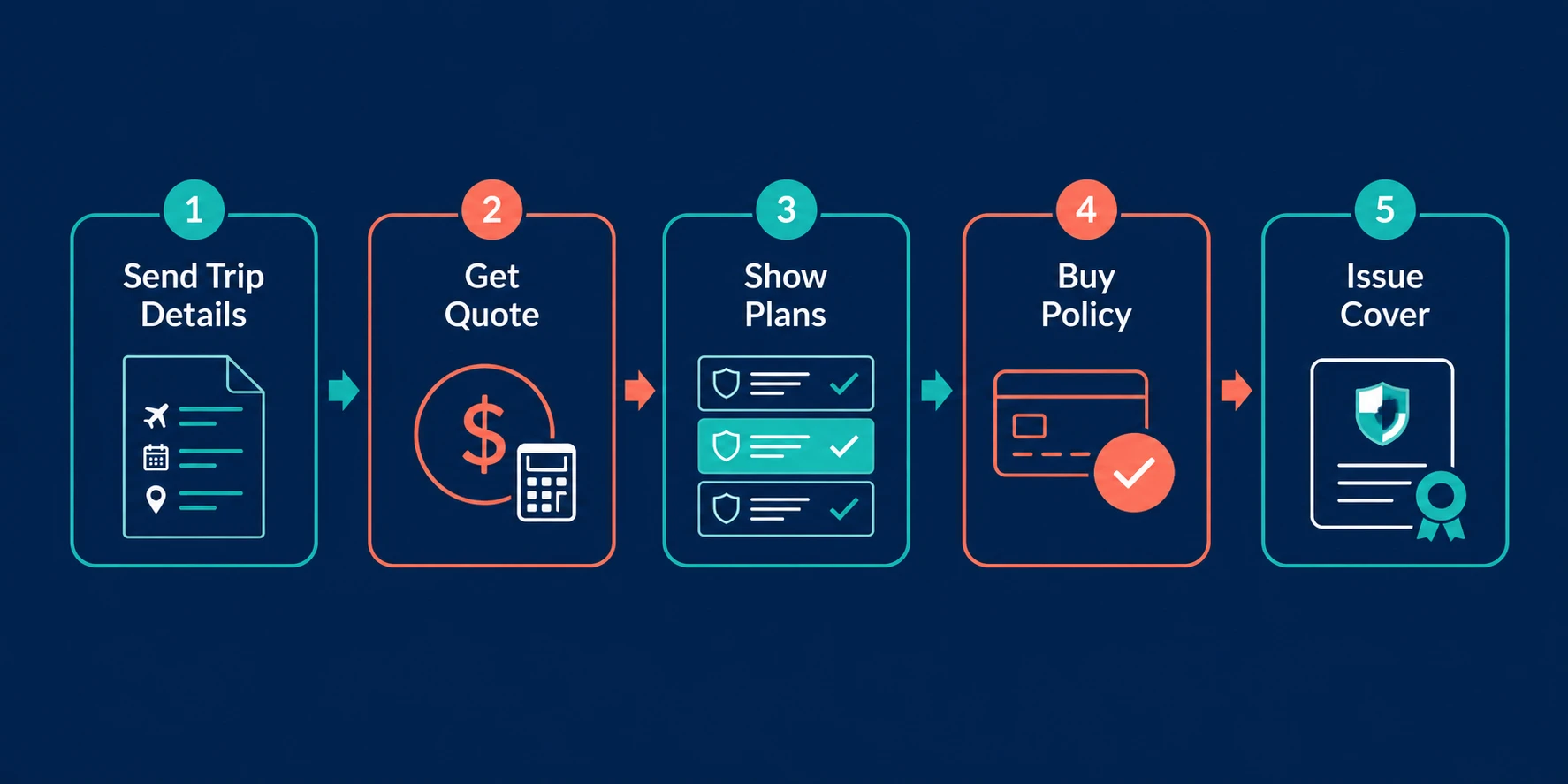
This mirrors how a flight booking API turns a search into a ticket. The quote-buy-issue core is the same. Only the product changes.
What Cover You Can Sell
A good travel insurance API returns many cover types. Each one protects a different risk. Here are the common ones.
| Cover type | What it protects |
|---|---|
| Trip cancellation | Money lost if the trip is cancelled |
| Medical | Health costs and emergencies abroad |
| Baggage | Lost, stolen, or delayed luggage |
| Trip delay | Costs from late or missed flights |
| Cancel for any reason | Wider, optional cover for more freedom |
Plans often bundle several covers together. Moreover, prices change by destination, trip length, and traveler age. Therefore, the API must return accurate, live quotes for each traveler.

Why Add a Travel Insurance API
A travel insurance API is one of the easiest ways to grow revenue. It adds value without adding inventory. Here is what you gain.
- New revenue: earn a commission on each policy sold.
- Higher value per booking: sell more in the same checkout.
- Better trust: travelers feel safer buying with you.
- Simple add-on: one API call adds it to your flow.
- Strong attach rate: many travelers want cover at checkout.
Insurance pairs well with your core products. For example, you can offer it alongside hotel API integration and flights. As a result, one checkout can sell the whole trip plus its protection.
Common Challenges to Know
Insurance is rewarding but regulated. Know these pitfalls before you connect.
- Regulation: selling insurance often needs a license or a licensed partner.
- Regional rules: cover and law differ by country.
- Clear terms: you must show what is and is not covered.
- Claims and refunds: the API must support cancel and claim flows.
- Accurate quotes: wrong data leads to wrong prices and disputes.
Regulation is the biggest hurdle. You usually cannot sell insurance alone without approval. Therefore, most platforms work through a licensed insurer or an aggregator that holds the right setup.
How to Connect a Travel Insurance API
You have two main paths. The right one depends on your scale and licensing.
Option 1: Direct insurer contracts
You can sign directly with insurers. This gives control over products and margin. However, it often needs licensing and many separate deals. Moreover, you build for each insurer. This path suits large, regulated sellers.
Option 2: Use an aggregator
An aggregator gives you one travel insurance API for many insurers. It often handles the licensing and compliance for you. As a result, you launch fast with less legal work. This is the same model behind a travel API aggregator for flights and hotels.
The steps to connect are simple:
- Sign with a provider and get sandbox keys.
- Test the quote and buy flows.
- Add the insurance step to your checkout.
- Show clear plan terms and prices.
- Go live and track your attach rate.
Final Thoughts
A travel insurance API turns every booking into a chance to earn more. It adds protection your travelers want, with little extra work. However, insurance is regulated and detailed. Therefore, most platforms connect through an aggregator that handles the hard parts.
Tripgic connects flights, hotels, cars, and activities through one unified API — insurance is not part of our product set today, but the same aggregator-vs-direct trade-off applies if you add it separately.