 Mohammad Fahim
An airport transfer API lets your platform sell rides between the airport and the hotel. It connects you to transfer suppliers in real time. As a result, travelers can book a car, shuttle, or van right after their flight and hotel. Moreover, it completes the trip and adds new revenue. In this guide, you will learn how an airport transfer API works and how to connect one.
Transfers are the last gap in many travel platforms. A traveler books a flight and a hotel, but not the ride between them. An airport transfer API fills that gap.
What Is an Airport Transfer API?
An airport transfer API is a software link between your platform and transfer suppliers. Through it, you search rides, get live prices, and book a transfer without manual work. An application programming interface (API) simply lets two systems talk to each other.
A transfer is a pre-booked ride between two fixed points. Usually it is the airport and the hotel. Unlike a taxi, it is booked in advance at a set price. Therefore, the traveler knows the cost and the pickup before they fly.
Transfers pair well with your other products. You already sell flights and hotels. Adding transfers completes the journey door to door. Specifically, it removes the stress of finding a ride on arrival.
How an Airport Transfer API Works
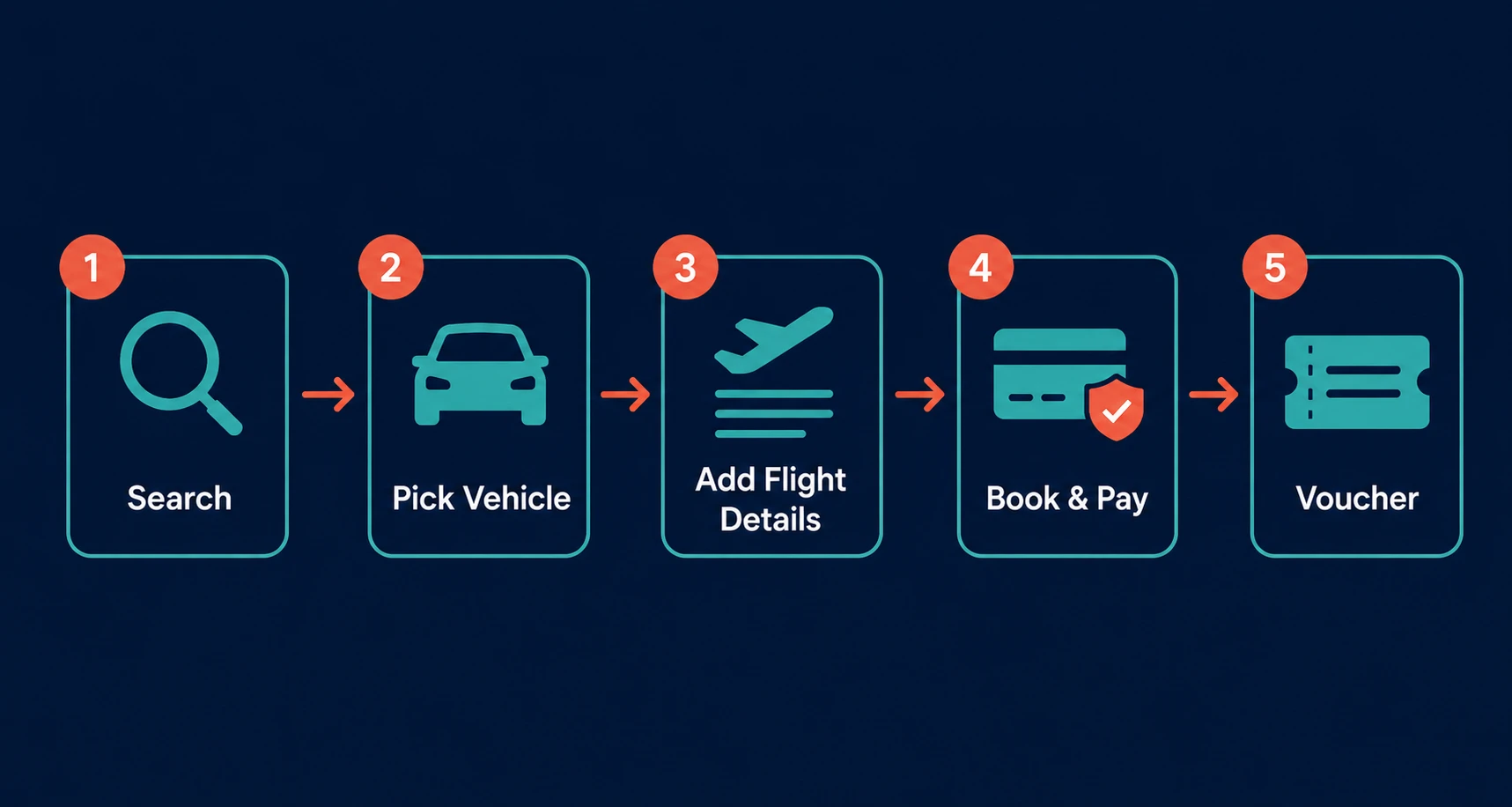
The flow is simple and fast. Here is the basic sequence from search to confirmed ride.
- Search — your platform sends pickup, drop-off, date, time, and passengers.
- Results — the API returns vehicle options with prices.
- Pick a vehicle — the traveler chooses a car, van, or shuttle.
- Add flight details — the flight number helps the driver track arrival.
- Book and pay — your platform confirms the ride.
- Confirmation — the API returns a voucher with pickup details.
The flight number is key for airport pickups. It lets the driver adjust for early or late flights. Therefore, a good airport transfer API supports flight tracking on arrival transfers.
This pattern mirrors a car rental API. The search-price-book core is the same. Only the product and pickup rules change.
Types of Airport Transfers
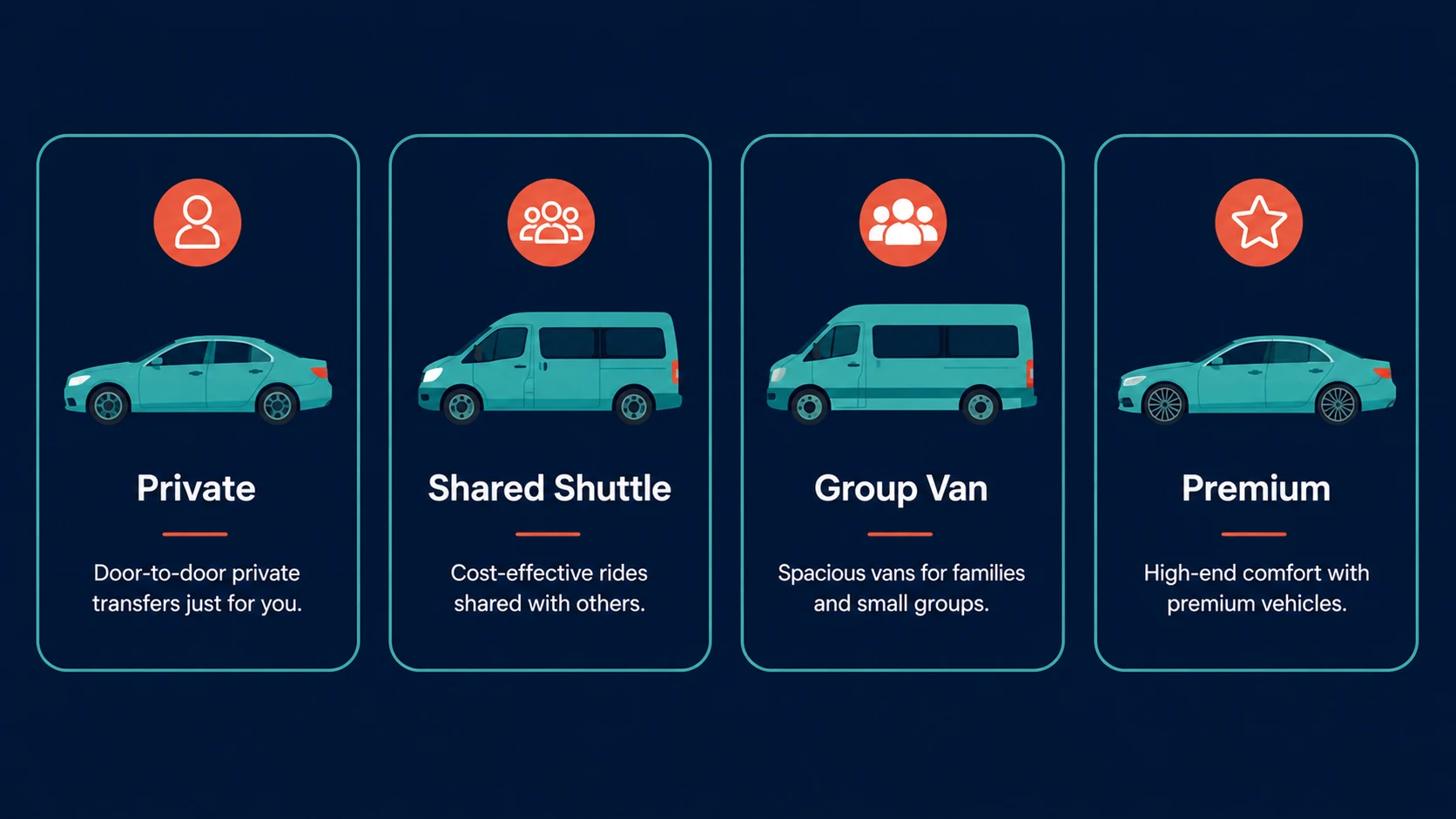
Transfers come in a few shapes. Each suits a different traveler and budget. A good feed returns all of them.
- Private transfer: a car just for your group, door to door.
- Shared shuttle: a cheaper ride shared with other travelers.
- Group or van: a larger vehicle for families or teams.
- Premium: business cars for corporate travelers.
Private rides cost more but are direct. Shared shuttles cost less but make stops. Therefore, your platform should show the trade-off clearly so travelers can choose.
What Data You Get
A strong API returns more than a price. It returns the detail a traveler needs to feel safe booking ahead.
| Data type | What it includes |
|---|---|
| Vehicle | Type, passenger and bag capacity |
| Price | Total fare, currency, what is included |
| Pickup | Meeting point, wait time, flight tracking |
| Rules | Cancellation window and refund terms |
| Voucher | Booking reference and driver contact |
Pickup detail matters most for airports. The traveler needs to know exactly where to meet the driver. As a result, clear meeting-point data lowers confusion and support calls.
Why Add an Airport Transfer API
An airport transfer API is an easy way to grow revenue and trust. It completes the trip with little extra work. Here is what you gain.
- New revenue: earn on every ride sold.
- Complete journey: sell the trip door to door.
- Higher value per booking: add a ride in the same checkout.
- Better trust: travelers feel cared for on arrival.
- Strong attach rate: many travelers want a ride waiting.
Transfers fit naturally after a flight and a hotel. For example, you can offer one alongside hotel API integration and flights. As a result, one checkout sells the whole journey.
Common Challenges to Watch
Transfers are simpler than flights, but they have their own pitfalls. Know these before you connect.
- Local coverage: supply varies a lot by city and airport.
- Pickup accuracy: wrong meeting points cause missed rides.
- Flight delays: the system must handle late or early arrivals.
- Clear pricing: show what is included, like bags and waiting time.
- Cancellations: rules differ by supplier and must be clear.
Coverage is the biggest gap. One supplier may be strong in Europe but weak in Asia. Therefore, many platforms use an aggregator to cover more airports.
How to Connect an Airport Transfer API
You have two main paths. The right one depends on your size and reach.
Option 1: Connect suppliers directly
You can integrate with transfer companies one by one. This gives control. However, each has its own format and coverage. So full global reach means many connections. This path suits large platforms only.
Option 2: Use an aggregator
An aggregator gives you one API for many transfer suppliers. You connect once and reach airports worldwide. As a result, you launch in weeks, not months. This is the same model behind multi-supplier travel inventory.
The basic steps to connect are simple:
- Sign with a provider and get sandbox keys.
- Test search, booking, and flight tracking.
- Map transfer data into your platform.
- Show clear pickup and price details.
- Go live and monitor your attach rate.
Final Thoughts
An airport transfer API completes the journey door to door. It adds revenue and removes arrival stress for travelers. However, coverage and pickup detail need care. Therefore, most platforms connect through an aggregator. It gives one connection, wide coverage, and a fast launch.
Tripgic connects flights, hotels, cars, activities, and transfers through one unified API. Want to add airport transfers without the integration pain?