
 Mehedi Ahsan Ashif
A travel API for OTAs is a single connection that feeds your online travel agency with bookable inventory. Instead of signing separate contracts with airlines, hotel chains, and car rental firms, you plug into one API. As a result, your OTA can search, price, and book products from many suppliers through one integration. This guide explains how it works, what it must include, and how to integrate it without slowing your roadmap.
What Is a Travel API for OTAs?
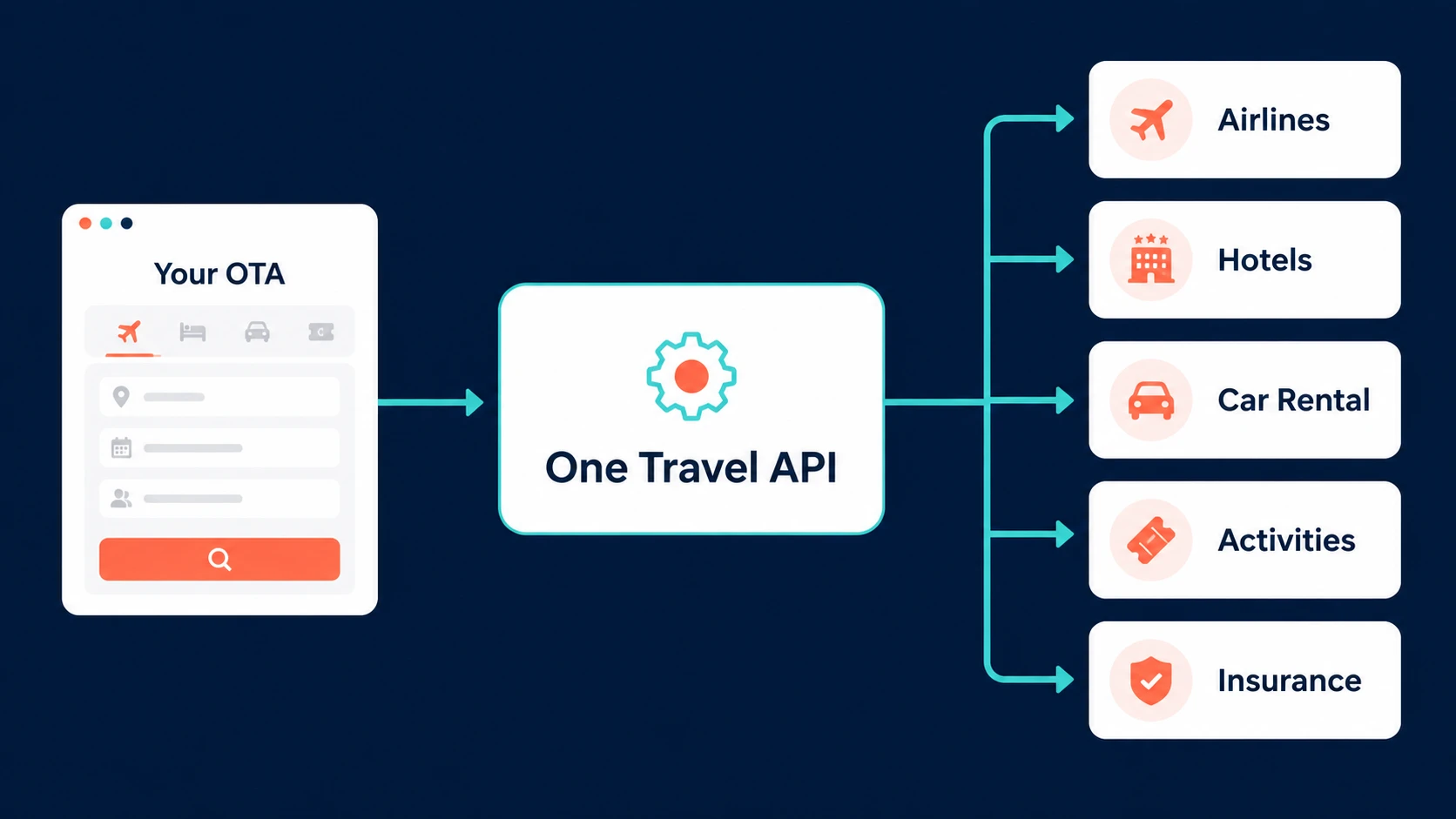
A travel API for OTAs is an interface that connects your booking platform to travel suppliers. It carries four core actions: search, price check, book, and manage. Your website sends a request, and the API returns live availability and prices. Then, when a customer pays, the API confirms the booking with the supplier.
OTAs can connect in two ways. First, direct APIs from single suppliers, such as one airline or one hotel chain. Second, an aggregator API that bundles many suppliers behind one endpoint. If you are new to the second model, read our guide on what a travel API aggregator is and how it works. For most OTAs, the aggregator path is faster and cheaper to scale.
An online travel agency lives or dies on supply. More inventory means more search results, better prices, and higher conversion. Therefore, the API layer is not a technical detail. It is the engine of your product.
Why OTAs Outgrow Direct Supplier Contracts
Most OTAs start with one or two direct supplier connections. That works at first. However, growth exposes four hard limits.
- Integration time. Each new supplier API takes 4-12 weeks of developer work. Certification and testing add more. Ten suppliers can consume a full year of engineering.
- Contract overhead. Every supplier wants its own commercial deal, deposit, and minimum volume. Small and mid-size OTAs rarely get good terms alone.
- Maintenance load. Suppliers change their APIs, deprecate versions, and run outages. Each connection needs ongoing monitoring and fixes.
- Content gaps. One supplier never covers everything. Customers leave when they cannot find the route, hotel, or price they saw elsewhere.
As a result, engineering time goes to plumbing instead of product. Your competitors ship loyalty features and better UX while your team maintains supplier connections. This is the core problem a unified API solves.
What a Travel API for OTAs Must Include
Not every API is OTA-ready. A travel API for OTAs must support the full selling cycle, not just search. Check these six capabilities before you sign.
- Fast multi-supplier search. OTA users compare options. The API should return combined results from many suppliers in under 2-3 seconds.
- Live pricing with no surprises. The price at booking must match the price at search. Frequent price jumps at checkout kill conversion.
- Full booking management. Create, change, and cancel bookings through the API. Voids, refunds, and schedule changes must be supported.
- Rich content. Hotel photos, room descriptions, fare rules, and baggage data. Thin content makes your OTA look weaker than rivals.
- Multi-product coverage. Flights, hotels, cars, and activities through one contract. Cross-selling raises the value of every customer.
- Clear reporting. Booking reports, commission statements, and reconciliation data your finance team can trust.
Additionally, ask about uptime history and support response times. A beautiful API with weak support becomes your problem at 2 a.m. on a holiday weekend. Our checklist on how to choose a travel API provider covers the seven checks in detail.
Single Supplier vs Aggregator: Which Fits Your OTA?
Both models have a place. The right choice depends on your size, your niche, and your engineering capacity. The table below compares them from an OTA point of view.
| Factor | Direct supplier APIs | Aggregator API |
|---|---|---|
| Time to add 10 suppliers | 6-12 months | One integration, 2-6 weeks |
| Contracts to manage | One per supplier | One |
| Negotiating power | Low for small OTAs | Pooled volume, better rates |
| Maintenance | Your team, per API | Handled by the aggregator |
| Content normalization | You build it | Included |
| Best for | Very large OTAs with dev teams | Startups, small and mid-size OTAs |
Large OTAs like Booking.com run direct connections because they have hundreds of engineers. In contrast, most OTAs get better economics from an aggregator. Some mature OTAs mix both: direct deals with their top 3 suppliers, plus an aggregator for everything else.
How to Integrate a Travel API for OTAs: 5 Steps
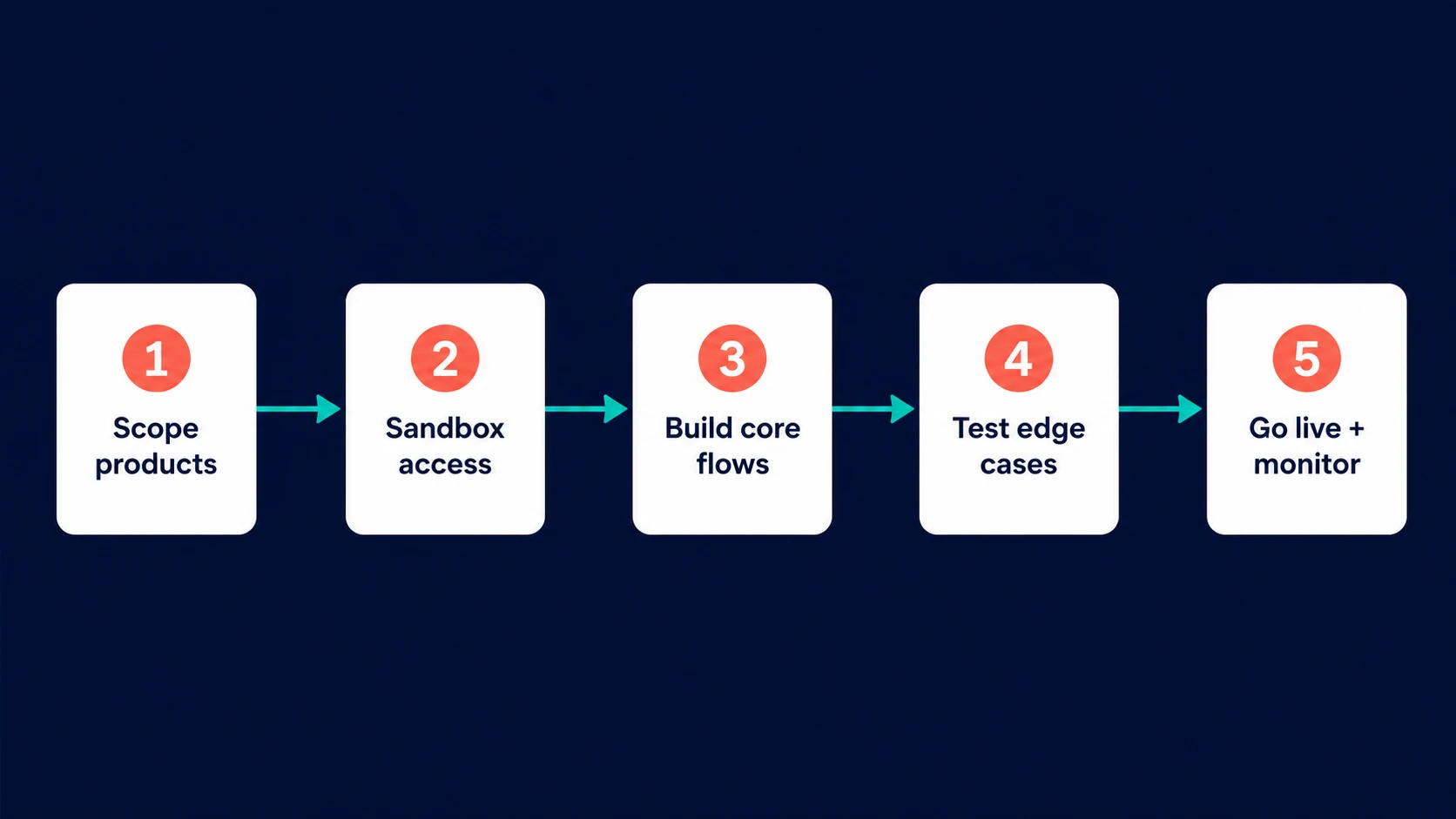
Integrating a travel API for OTAs follows a clear path. Here is the standard five-step flow our partners use.
- Scope your products. Decide what you sell first: flights only, or flights plus hotels. A narrow first phase ships faster.
- Get sandbox access. Test search, booking, and cancellation against test data. Confirm response times under realistic load.
- Build the core flows. Connect search, checkout, and booking confirmation to your front end. Map the API data to your own product display.
- Test edge cases. Failed payments, schedule changes, partial refunds, and supplier timeouts. Edge cases cause most post-launch incidents.
- Go live and monitor. Launch with one market or product. Watch error rates and look-to-book ratios, then expand.
With a well-documented aggregator API, this whole cycle typically takes 2-6 weeks. Direct multi-supplier builds take far longer because every step repeats per supplier.
Costs and Pricing Models for OTAs
Pricing matters as much as technology. OTAs run on thin margins, so the API cost model must match your booking volume. You will usually see four models.
| Model | How it works | Best when |
|---|---|---|
| Per-request | You pay per API call or search | High conversion, low search waste |
| Revenue share | Provider takes a share of each booking | Low volume, no upfront budget |
| Subscription | Fixed monthly fee, set request limits | Stable, predictable volume |
| Markup / net rates | You sell above a net price | Hotels, transfers, packages |
Watch the look-to-book ratio clause. OTAs generate many searches per booking, and some providers charge for heavy search traffic. Therefore, model your real traffic before signing. For a deeper breakdown, see our post on travel API pricing models.
How OTAs Make Money with a Travel API
The API is not only a cost. It is also how your OTA earns. There are three main revenue paths.
- Markup on net rates. The API gives you a net price for hotels, transfers, or packages. You add your own margin on top. You control the markup per market or product.
- Commission from suppliers. For flights and some hotel programs, the supplier pays a commission per booking. The API reports it so finance can reconcile.
- Ancillary sales. Seats, bags, transfers, and insurance added at checkout. For example, a travel insurance API can add cover to every booking with one extra call.
Ancillaries matter more than many OTAs expect. The flight itself often carries a thin margin. However, each add-on raises revenue per booking without raising marketing cost. Therefore, pick an API that exposes ancillary content, not just the base product.
Common Mistakes OTAs Make
We see the same avoidable mistakes across OTA integrations. Check your plan against this list.
- Choosing on price alone. The cheapest API with slow search or thin content costs more in lost bookings than it saves in fees.
- Ignoring booking management. Search and book is easy. Changes, refunds, and schedule changes are where weak APIs break.
- Skipping the look-to-book math. A pricing model that looks cheap can become expensive once real search traffic arrives.
- Launching every product at once. Start with one strong vertical. Expand after the first flows are stable.
- No fallback plan. Even good APIs have outages. Decide early how your OTA behaves when a supplier feed goes down.
Final Thoughts
Supply is the foundation of every OTA. The faster you can add quality inventory, the faster you grow. The right travel API for OTAs turns a year of supplier integrations into one short project, and it frees your team to build the features customers actually see.
Tripgic gives OTAs one API for flights, hotels, cars, and activities from multiple suppliers. Talk to our team and see how fast your OTA can scale its supply.


 Akhirul Islam