
 Akhirul Islam
The best travel API is the one that fits your business type, your volume, and your budget. There is no single winner for everyone. However, there is a clear way to decide. This guide compares the three main options, maps them to business types, and shows how to test before you sign. By the end, you will know exactly which travel API fits your platform.
What Makes the Best Travel API?
The best travel API is judged on five things: coverage, speed, booking management, pricing model, and support. Coverage means how many suppliers and products you can sell. Speed means how fast search results return. Booking management means changes, cancellations, and refunds work through the API.
Many lists rank travel APIs by brand name. That is the wrong lens. Instead, judge each option against your own use case. A perfect API for a large airline reseller can be a poor fit for a hotel startup. Therefore, start with your business type, not with a vendor list.
Types of Travel APIs: Direct, GDS, and Aggregator
Every travel API falls into one of three groups. Understanding them makes the choice much simpler.
- Direct supplier APIs. One airline, one hotel chain, or one bed bank. Deep content, but you need many contracts and many integrations.
- GDS APIs. A global distribution system like Amadeus, Sabre, or Travelport. Wide airline reach, but legacy technology, certification hurdles, and per-segment fees. See our travel API vs GDS comparison.
- Aggregator APIs. One API that bundles many suppliers: GDS, NDC, low-cost carriers, hotels, cars, and activities. One contract, one integration, normalized data.
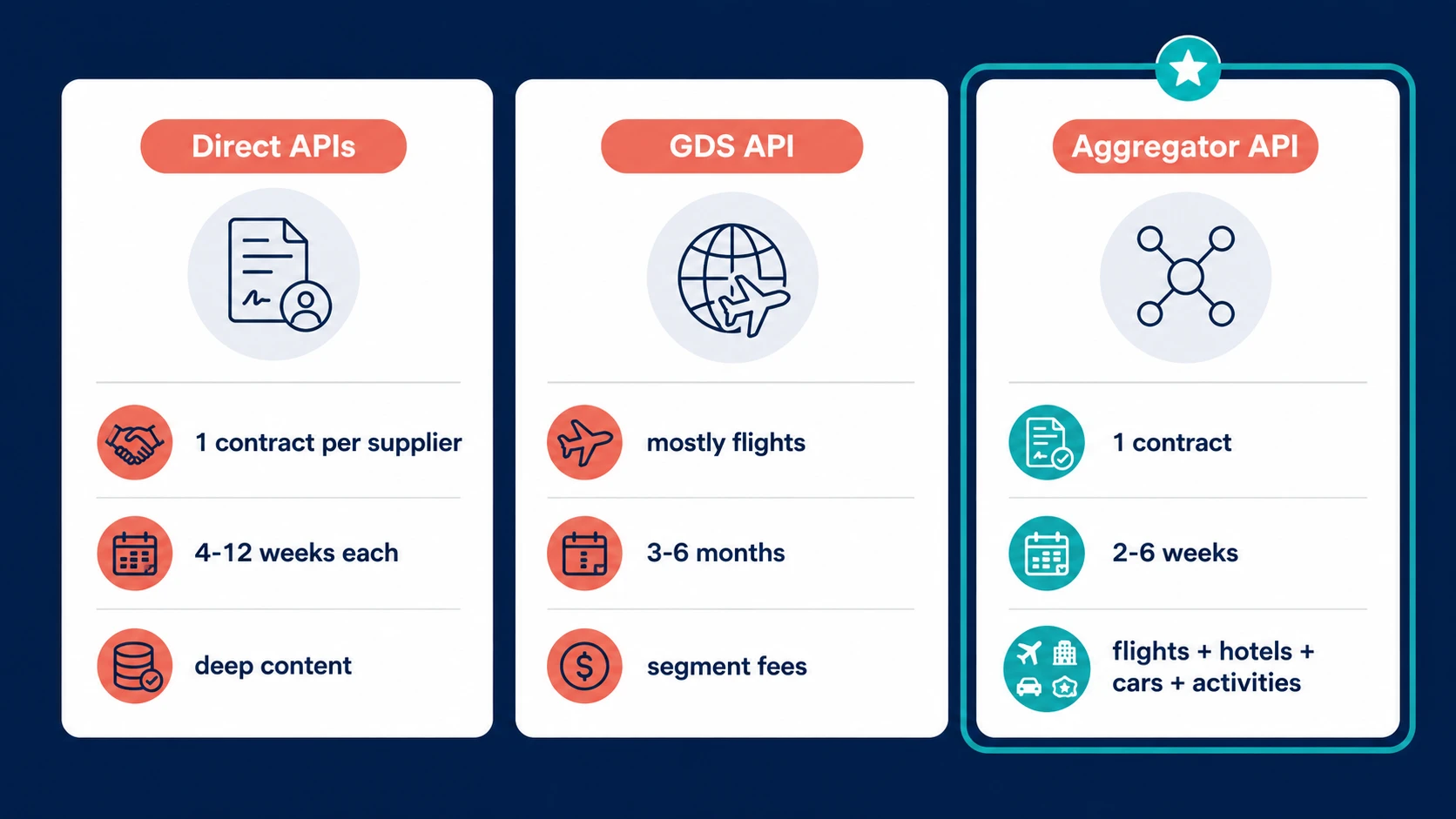
Aggregators have become the default starting point. They remove the contract and maintenance burden that makes the other two paths slow. Our guide on what a travel API aggregator is explains the model in depth.
Best Travel API by Business Type
Your business type sets your real requirements. Here is the short map, with a deeper guide for each.
- OTAs. You need wide supply, fast search, and look-to-book friendly pricing. Read the full guide: travel API for OTAs.
- Travel startups. You need zero upfront cost, a sandbox on day one, and a 2-6 week launch. Read: travel API for startups.
- Corporate travel platforms. You need policy controls, approvals, and reporting on top of supply. Read: corporate travel API.
- Tour operators. You need packaging: flights plus hotels plus transfers priced together in real time.
Notice the pattern. The supply layer is shared, but the must-have features differ by business. As a result, the best travel API for you is the one strong in YOUR must-have column, not the one with the longest feature list.
Compare the Options: Decision Table
| Factor | Direct APIs | GDS API | Aggregator API |
|---|---|---|---|
| Contracts needed | One per supplier | One + certification | One |
| Time to launch | 4-12 weeks each | 3-6 months | 2-6 weeks |
| Products covered | One per supplier | Mostly flights | Flights, hotels, cars, activities |
| Upfront cost | Deposits, minimums | Setup + segment fees | Often zero (revenue share) |
| Maintenance | Your team, per API | Your team | Provider handles it |
| Best for | Very large players | Flight-heavy agencies | OTAs, startups, tour operators |
Costs deserve a closer look than this table can give. For the full breakdown of fees and models, see travel API pricing models and GDS API cost.
How to Test the Best Travel API Before You Commit
Shortlists lie. Sandboxes do not. Before any contract, run a one-week test against each candidate. Check these six points.
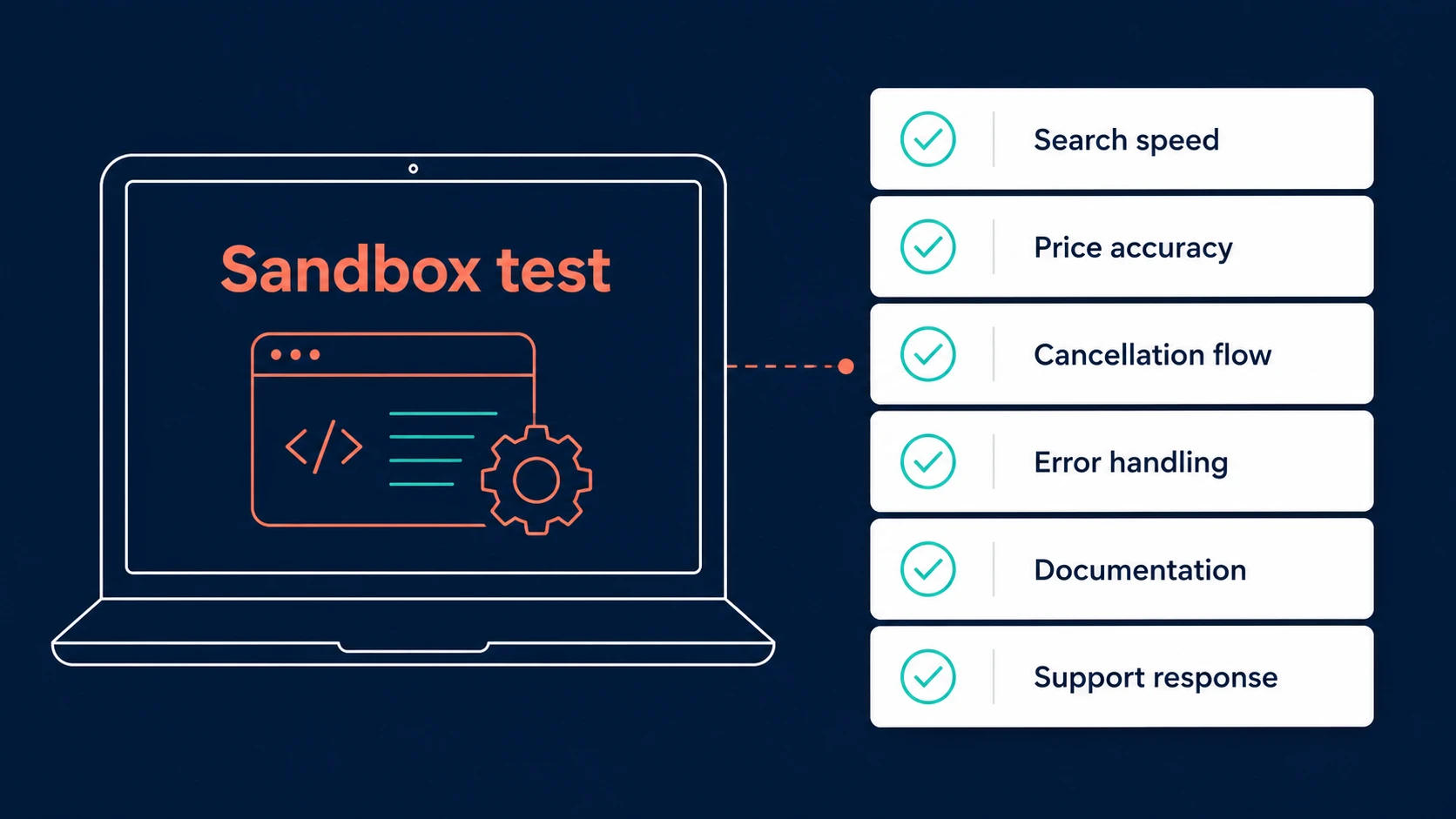
- Search speed. Send realistic queries. Results should return in under 2-3 seconds.
- Price accuracy. Book in the sandbox. The booked price must match the search price.
- Cancellation flow. Cancel and change test bookings. Confirm refund data comes back through the API.
- Error handling. Send bad requests on purpose. Clear error messages save weeks of debugging later.
- Documentation. Your developer should answer their own questions from the docs, not from support tickets.
- Support response. Ask a technical question during the trial. Measure how fast and how well they answer.
Additionally, check the contract itself: exit terms, data ownership, and uptime promises. Our checklist on how to choose a travel API provider covers the seven commercial checks before signing.
Common Mistakes When Picking a Travel API
- Choosing by brand name. A famous logo does not mean a fit for your use case or your volume.
- Ignoring the migration risk. Suppliers retire APIs. Amadeus closed its self-service API on July 17, 2026, and every app built on it broke that day. Pick a provider that absorbs such changes for you.
- Comparing price lists, not total cost. Add integration time, maintenance, and search-traffic fees to the real bill.
- Skipping the sandbox test. A demo call with sales is not a test. Real requests from your own code are.
- Locking in without exit terms. Make sure you can leave with your data if the service disappoints.
Final Thoughts
Stop searching for a universal winner. Define your business type, list your must-haves, and test two or three candidates in a sandbox. The best travel API for your platform will be obvious within a week of real testing.
Tripgic combines GDS, NDC, low-cost carrier, hotel, car, and activity content in one API. Talk to our team and test it against your use case.





 Mehedi Ahsan Ashif