 Golam Shahrier
NDC vs GDS is a hot topic in travel tech. Both are ways to sell airline content. However, they work in very different ways. This guide explains NDC vs GDS in plain English.
First, you will learn what each one is. Then, you will see the key differences. Finally, you will learn what the shift means for you.
What Are NDC and GDS?
A GDS is an old network that connects sellers to airlines. NDC is a modern standard for rich, direct airline offers. To go deeper, read our guides on what NDC is and what a GDS is.
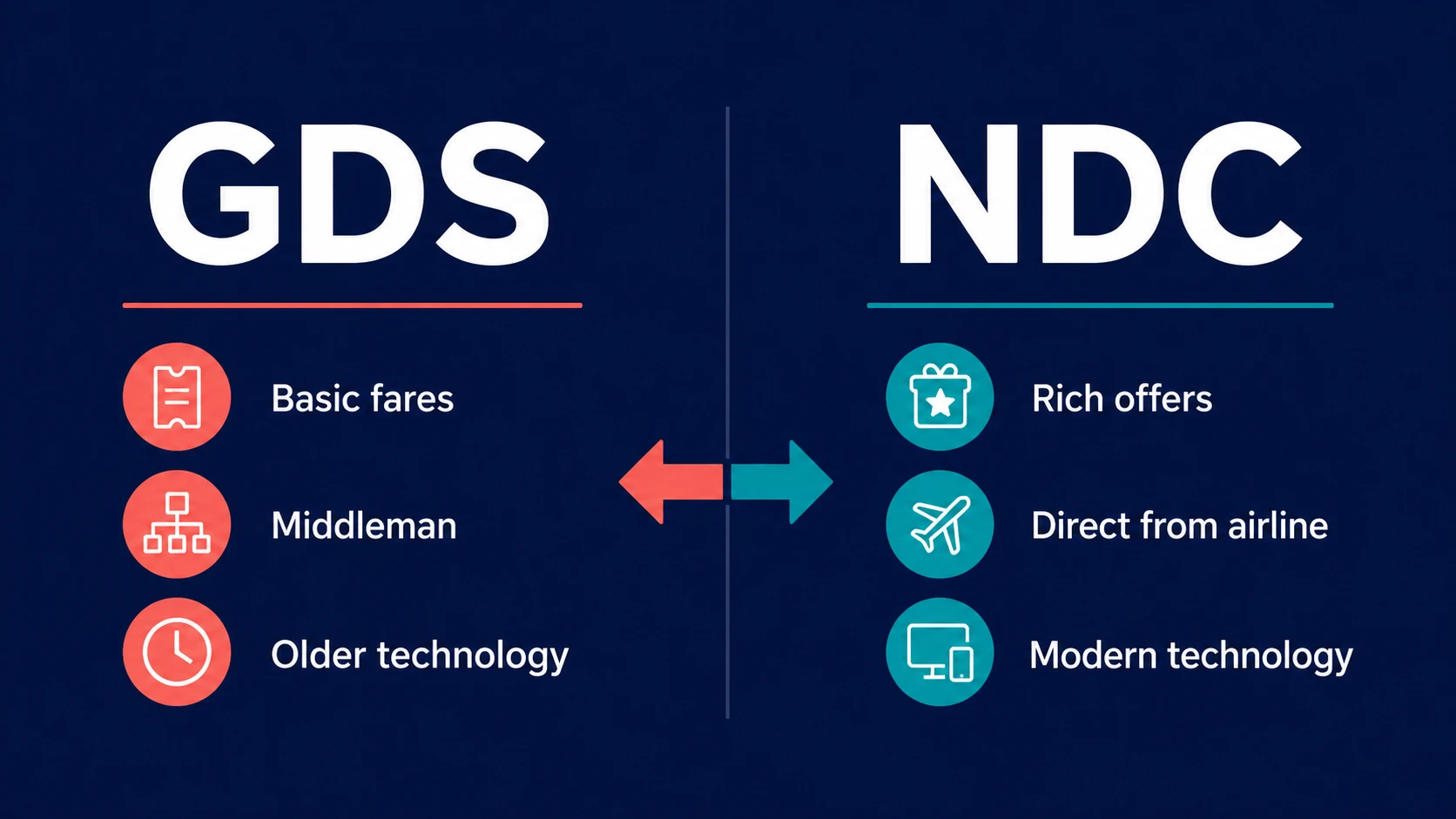
NDC vs GDS: The Key Differences
| Point | GDS | NDC |
|---|---|---|
| Content | Basic fares | Rich offers |
| Source | Through a middleman | Direct from airline |
| Technology | Older | Modern standard |
| Personalization | Limited | Strong |
So the main gap is richness. NDC shows seats, bags, and bundles. In contrast, the GDS often shows plain fares.
Why NDC Is Growing
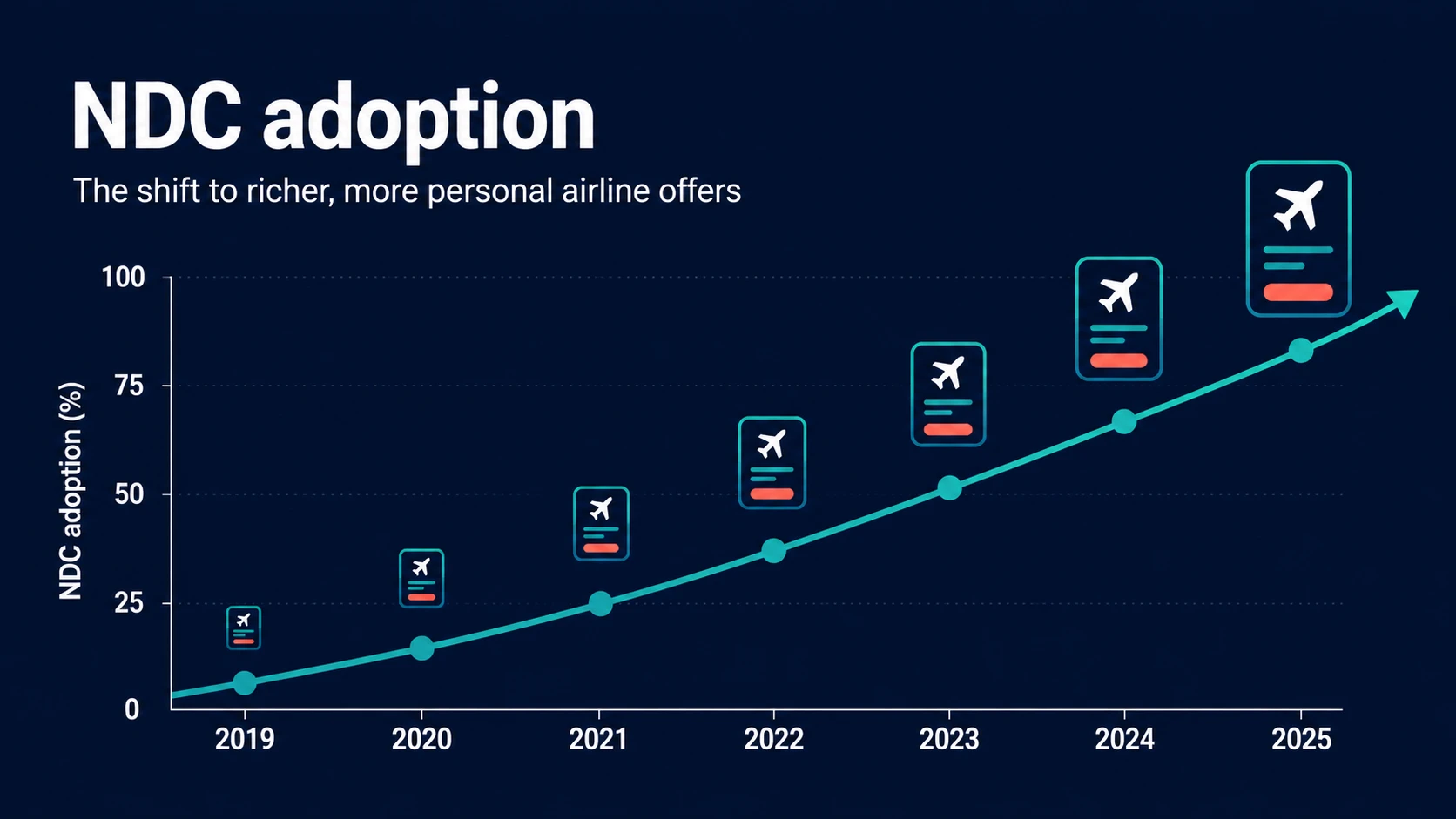
Airlines want to sell directly and show full offers. NDC lets them do this. Moreover, it opens new revenue from extras like seats and bags.
You can read the standard on the official IATA NDC page. As a result, more airlines adopt it each year.
NDC vs GDS: Which Should You Use?
The honest answer is often both. The GDS still has wide reach. However, NDC adds rich content the GDS cannot match.
For a related view, read our guide on travel API vs GDS. It compares old and modern paths.
You Do Not Have to Choose
An aggregator can blend both channels for you. So you get GDS reach and NDC richness in one API. To learn how, read our guides on the NDC aggregator and travel API aggregator.
Final Thoughts
NDC vs GDS is not really a war. The GDS gives reach, while NDC gives rich offers. Therefore, the smart path is to use both through one API.
Tripgic blends GDS, NDC, and low-cost carrier content in one travel API. You get reach and richness together. Talk to our team to see how.