
 Mehadi Hassan
If you run a travel agency or OTA, you have probably heard the term “booking extranet.” But what exactly is it — and do you need one?
A booking extranet is a B2B web portal that gives travel businesses direct access to live rates and inventory from hotels, airlines, and other suppliers — with no API integration required. You log in, search, and book.
This guide explains how a booking extranet works, who uses one, and how it compares to a travel API — so you can decide which option fits your business.
What Is a Booking Extranet?
A booking extranet is a secure online portal built for B2B travel buyers — agencies, OTAs, tour operators, and corporate travel managers. Through the portal, you get access to live rates and availability from multiple suppliers in one place.
Depending on the provider, you can access:
- Hotel rates and room availability
- Flight fares and seat inventory
- Transfer, activity, and package options
- Train tickets, eSIMs, and visa services
There are two types of booking extranet:
Supplier extranet — run by a single supplier. For example, a hotel chain’s own portal where agencies log in to book that hotel’s rooms directly. You need a separate login for each supplier.
Aggregator extranet — run by a travel technology company that connects many suppliers. One login gives you access to rates from multiple airlines, hotels, and service providers at once.
For most travel businesses, the aggregator extranet is the practical choice. You get broader inventory without signing separate contracts with every supplier.
How a Booking Extranet Works
Using a booking extranet is straightforward. Here is the typical flow:
- Log in to the web portal with your agency credentials.
- Search — enter destination, travel dates, and passenger details.
- Compare rates — see live prices from multiple suppliers in one view.
- Book — confirm the reservation in a few clicks.
- Receive the voucher or ticket — issued instantly or within minutes.
Everything runs in a browser. No developer, no code, no API setup. The extranet pulls live data from suppliers in real time, so the rates and availability you see are always current.
One important distinction: a booking extranet is designed for manual, human-driven bookings. If you need automated, high-volume processing — thousands of transactions per day handled by your own platform — you need a travel API instead. We cover that comparison below.
Who Uses a Booking Extranet?
A booking extranet is the right tool for travel businesses that:
- Do not have a development team
- Are early-stage or testing a new market
- Need to start booking quickly — no long integration project
- Handle low to medium booking volumes manually
Small and mid-size travel agencies use extranets to book hotels and flights for clients without needing to build a booking engine. Tour operators use them to manually assemble packages — combining flights, hotels, and transfers from one portal. DMCs (Destination Management Companies) access regional rates for inbound buyers. Corporate travel managers book business travel for employees using negotiated B2B rates.
Booking Extranet vs Travel API — Which One Do You Need?
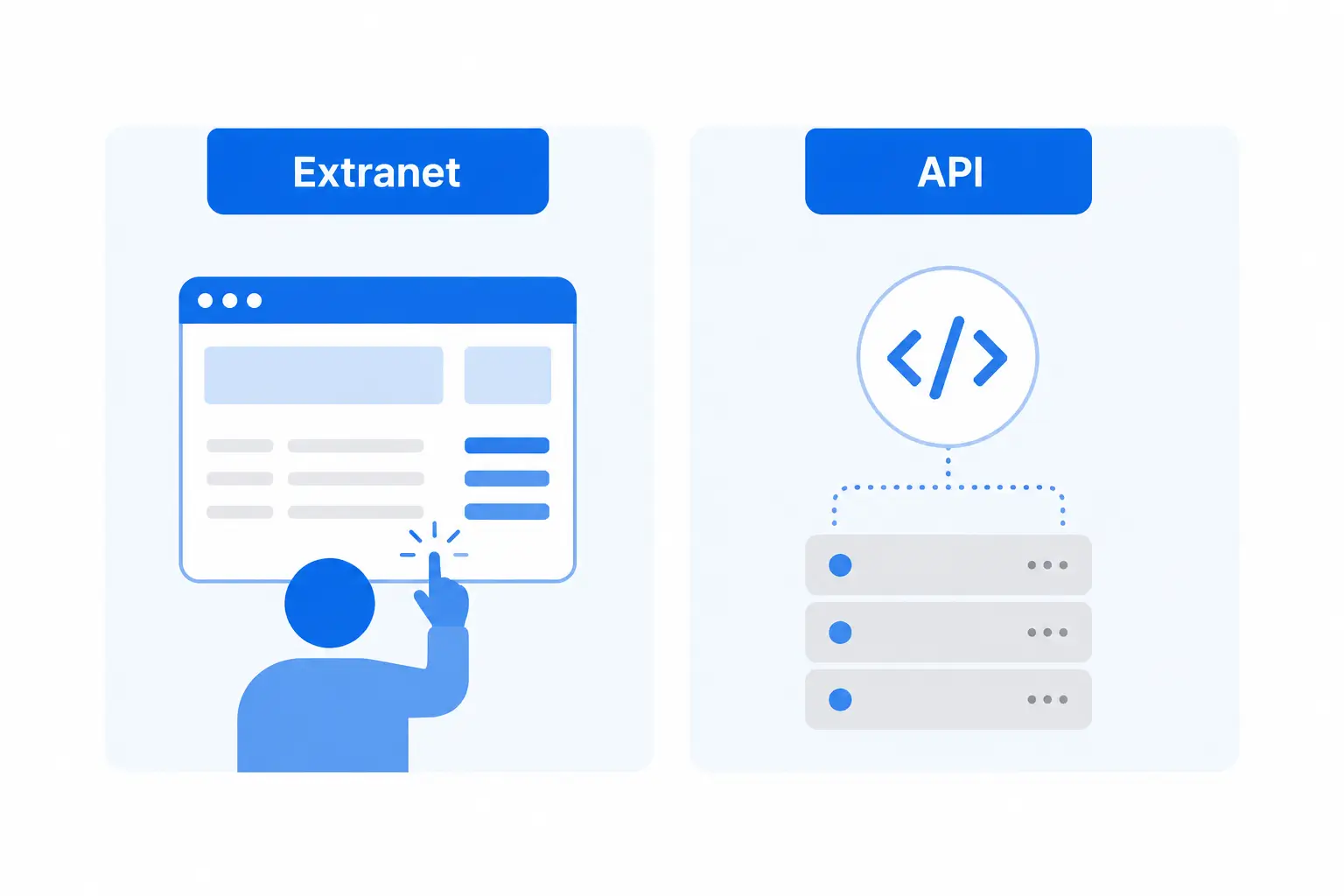
This is the most common question from growing travel businesses. The short answer: start with an extranet, switch to an API when volume demands it.
| Booking Extranet | Travel API | |
|---|---|---|
| Tech needed | None — browser only | Developer required |
| Setup time | Minutes | Weeks to months |
| Booking volume | Low to medium (manual) | High (automated) |
| Customization | Limited to portal UI | Fully customizable |
| Best for | Agencies, DMCs, startups | OTAs, platforms, SaaS |
| Cost to start | Low | Higher upfront |
The key difference is automation. An extranet requires a human to search and confirm each booking. An API connects your platform directly to supplier systems — bookings happen automatically, at scale, without manual input.
If you are testing a new market or your team handles bookings one at a time, an extranet is the faster and cheaper starting point. When you build your own booking platform and need it to process reservations automatically, that is when you move to an API. See our full guide on building vs buying a travel API for a deeper comparison.
What to Look for in a Booking Extranet
Not all extranets are equal. Before signing up with a provider, check these five things:
1. Supplier and product coverage Does the extranet cover the products you sell — flights, hotels, transfers, activities? An aggregator extranet with multi-product access saves you from managing several separate portals.
2. Real-time rates Confirm prices update live. Cached or delayed rates lead to booking errors, failed transactions, and unhappy clients.
3. Multi-currency support Essential if you serve clients in different markets. Check whether the portal shows prices in your local currency and supports multi-currency invoicing.
4. Reporting and invoicing tools A good extranet includes booking history, downloadable vouchers, and basic financial reports — so you can manage your business, not just make reservations.
5. Support and SLA Travel runs around the clock. Check the provider’s support hours and guaranteed response times, especially for urgent booking issues during weekends and public holidays.
How Tripgic’s B2B Travel Platform Works
Tripgic is a unified travel API aggregator. Through one account you access 8 product families — flights, hotels, activities, tour packages, trains, transfers, eSIMs, and visas — backed by 73 API endpoints connected to global suppliers.
The same inventory sits behind every access route, so the choice between a portal and an API is about how your team works rather than what you can sell. Which routes are open to you depends on your plan — ask on the demo call.
Pricing is a flat fee per transaction on top of the supplier’s net fare, never a percentage of the booking value. Current figures are on the pricing page.
For OTAs and larger platforms already running their own booking engine, Tripgic’s API connects directly — one integration for all eight product lines.
Want to see the platform? Book a demo and we will walk you through live inventory, pricing, and the integration options available for your business.




 Mehedi Ahsan Ashif
 Akhirul Islam