
 Mehadi Hassan
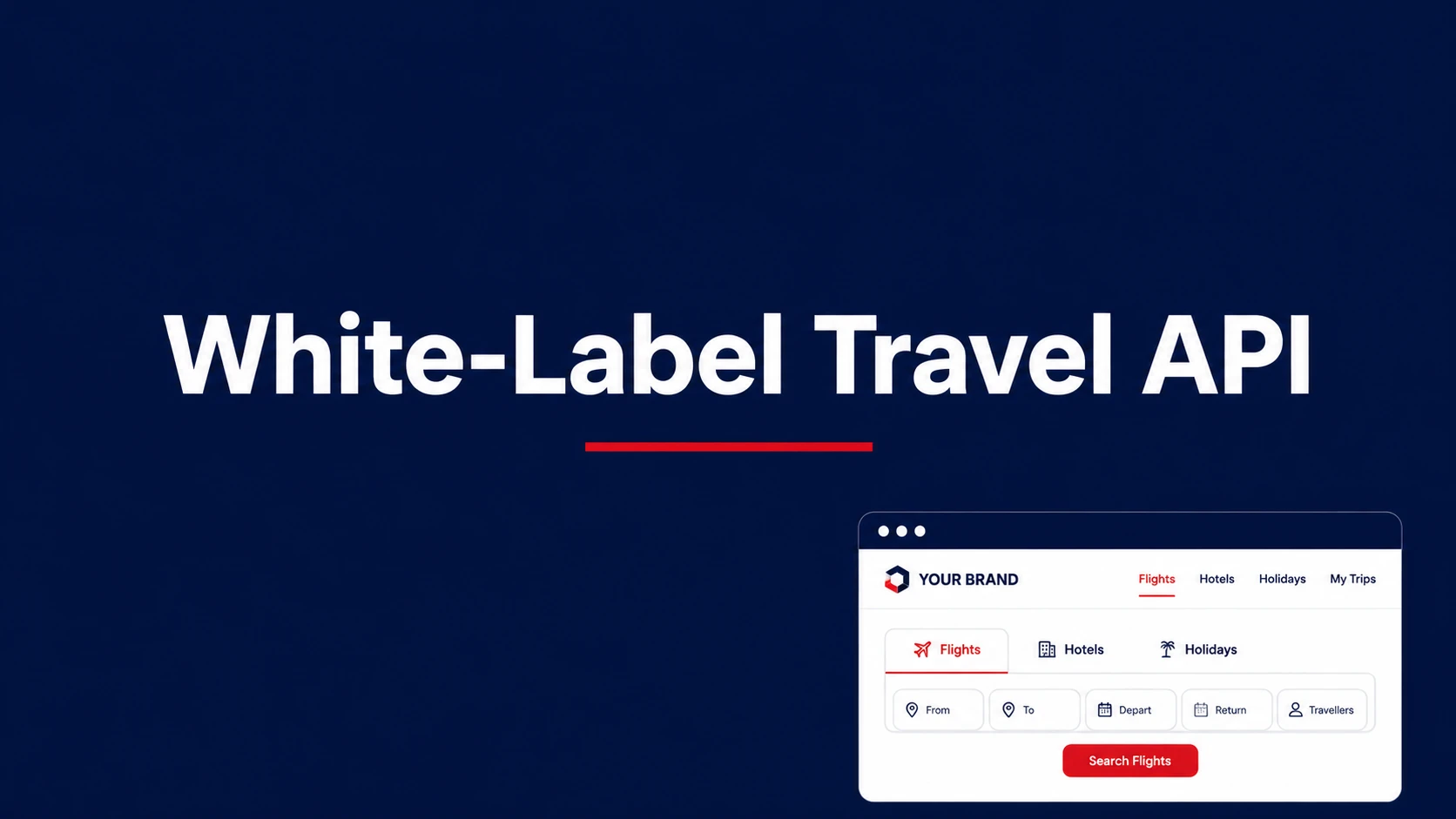
A white-label travel API is a solution where a technology provider gives you both the supplier connections and a ready-made booking interface that you brand as your own. Instead of building a booking engine from scratch, you configure the platform — your logo, your colors, your domain — and launch. Your customers interact with what looks like your travel booking site, while the inventory and booking logic run on the provider’s infrastructure.
This guide explains what a white-label travel API includes, who uses it, how it compares to a standard integration, and what to check when choosing a provider.
What Is a White-Label Travel API?
A white-label travel API has two layers working together.
First, the API layer: supplier connections for flights, hotels, car rentals, transfers, and activities — the same inventory any travel API aggregator provides. Second, the front-end layer: a ready-made booking interface with search forms, results pages, booking flows, and confirmation pages. You brand it with your identity, but you do not build it.
This is the key difference from a standard API integration. Specifically, a standard API integration gives you only the data layer — your team still needs to build the front-end. In short, a white-label gives you both layers as one product. As a result, it is significantly faster to launch and requires far less engineering investment.
Who Uses a White-Label Travel API?
A white-label travel API fits businesses that want to offer travel bookings without owning the full technology stack:
- Banks and fintech companies: add a travel booking portal to your app or website. You earn commission on every booking without building travel infrastructure.
- Loyalty programs: let members redeem points or miles for flights, hotels, and activities through a branded portal — no custom booking engine needed.
- Corporate travel tools: give employees a self-booking tool with your company branding, travel policy controls, and approval flows built in.
- Tour operators: add an online booking channel for your packages without building a custom front-end. Sell direct to consumers without a dedicated tech team.
- Airlines and hotel chains: offer ancillary products — car rentals, activities, cross-sells — through a branded add-on portal.
- Travel startups: launch a consumer-facing travel brand quickly with low upfront tech cost. Validate the market before committing to a custom build.
For startup-specific guidance, see travel API for startups: how to launch fast in 2026.
What a White-Label Platform Includes
A complete white-label travel API platform typically includes these components:
- Search: flight search (one-way, return, multi-city), hotel search by destination and dates, car rental search by pickup location.
- Results display: filterable results with live pricing, availability, images, and content descriptions from suppliers.
- Booking flow: passenger or guest details, seat or room selection, add-ons (insurance, baggage), payment, and confirmation.
- Branded UI: your logo, colors, and domain. Most providers allow custom CSS; some support full layout customization.
- Payment processing: integration with major payment gateways or a built-in system supporting multiple currencies.
- Admin dashboard: booking management, cancellations, reporting, and commission tracking.
- Multi-language and multi-currency: essential for any platform serving international travelers.
Additionally, the best providers include mobile-responsive design by default. In fact, most travel searches now start on mobile. A white-label platform that looks poor on a phone will lose bookings before users reach the payment step.
White-Label vs Custom API Integration
Ultimately, the right choice depends on your timeline, team size, and how much UI control you need.
| Factor | White-label | Custom API integration |
|---|---|---|
| Time to launch | 2-8 weeks | 2-6 months |
| Development needed | Minimal (configuration only) | Full front-end build required |
| UI control | Limited (template-based) | Full control |
| Upfront cost | Lower | Higher |
| Ongoing flexibility | Lower — changes need provider support | Higher — you own the code |
| Best for | Fast launch, small tech team | Custom UX, larger tech team |
In practice, white-label is the right choice when speed to market matters more than UI uniqueness. However, if your product requires a deeply custom experience — specific flows, tight integration with existing systems, or a unique UX — a standard API integration with your own front-end gives you more long-term control.
For more on this decision, see build vs buy travel API: which path fits your platform?.
Benefits and Drawbacks
Therefore, before choosing a white-label solution, weigh these benefits against the limitations:
- Fast to market: go live in weeks, not months. No booking engine development needed.
- Lower upfront cost: you avoid the engineering cost of building search, booking, and payment flows from scratch.
- Provider-maintained: supplier connections, bug fixes, and platform updates are the provider’s responsibility — not yours.
- Branded experience: your customers see your brand throughout the booking journey, not the provider’s.
However, there are real trade-offs to consider:
- Limited UI control: you work within the provider’s template. Significant design changes may not be possible or may require additional cost.
- Vendor dependency: if the provider changes pricing, has downtime, or is acquired, your platform is directly affected.
- Shared infrastructure: some white-label platforms share server resources across clients, which can affect performance during peak booking periods.
- Lower differentiation: if several brands use the same provider, the booking experience looks and feels similar to competitors.
How to Choose a White-Label Travel API Provider
When evaluating a white-label travel API provider, check these six factors:
| Factor | What to confirm |
|---|---|
| Inventory coverage | Does it include all the product types you need — flights, hotels, activities, transfers? |
| Branding flexibility | Can you use your own domain, logo, and colors? Is the UI fully white-labeled with no provider branding visible? |
| Payment support | Does it support your target market’s preferred payment methods and currencies? |
| Commission model | How do you earn — markup, commission, or revenue share? Are the rates transparent upfront? |
| Uptime SLA | What is the guaranteed platform availability? Require 99.9% or better before signing. |
| Technical support | Is there dedicated support during setup and for ongoing operations? |
Furthermore, ask whether the provider gives you access to the raw API alongside the white-label front-end. Indeed, some providers offer both. This matters if you later want to build custom features or integrations beyond what the white-label template supports.
For a broader comparison of travel API providers, see best travel API in 2026: how to pick the right one. If you run an OTA, travel API for OTAs: how to scale supply in 2026 covers supplier scaling in more detail. Finally, for background on how white-label products work in general, see white-label products on Wikipedia.
Final Thoughts
A white-label travel API is the fastest path from idea to live booking platform. For businesses that need to launch quickly — banks, loyalty programs, startups, tour operators — it removes months of development and replaces it with weeks of configuration.
Tripgic is the API route: one integration for your own front-end, with a white-label API endpoint available as an option. See Tripgic pricing for which plans include it.
Talk to the Tripgic team to see which option fits your platform best.





 Mehedi Ahsan Ashif
 Akhirul Islam